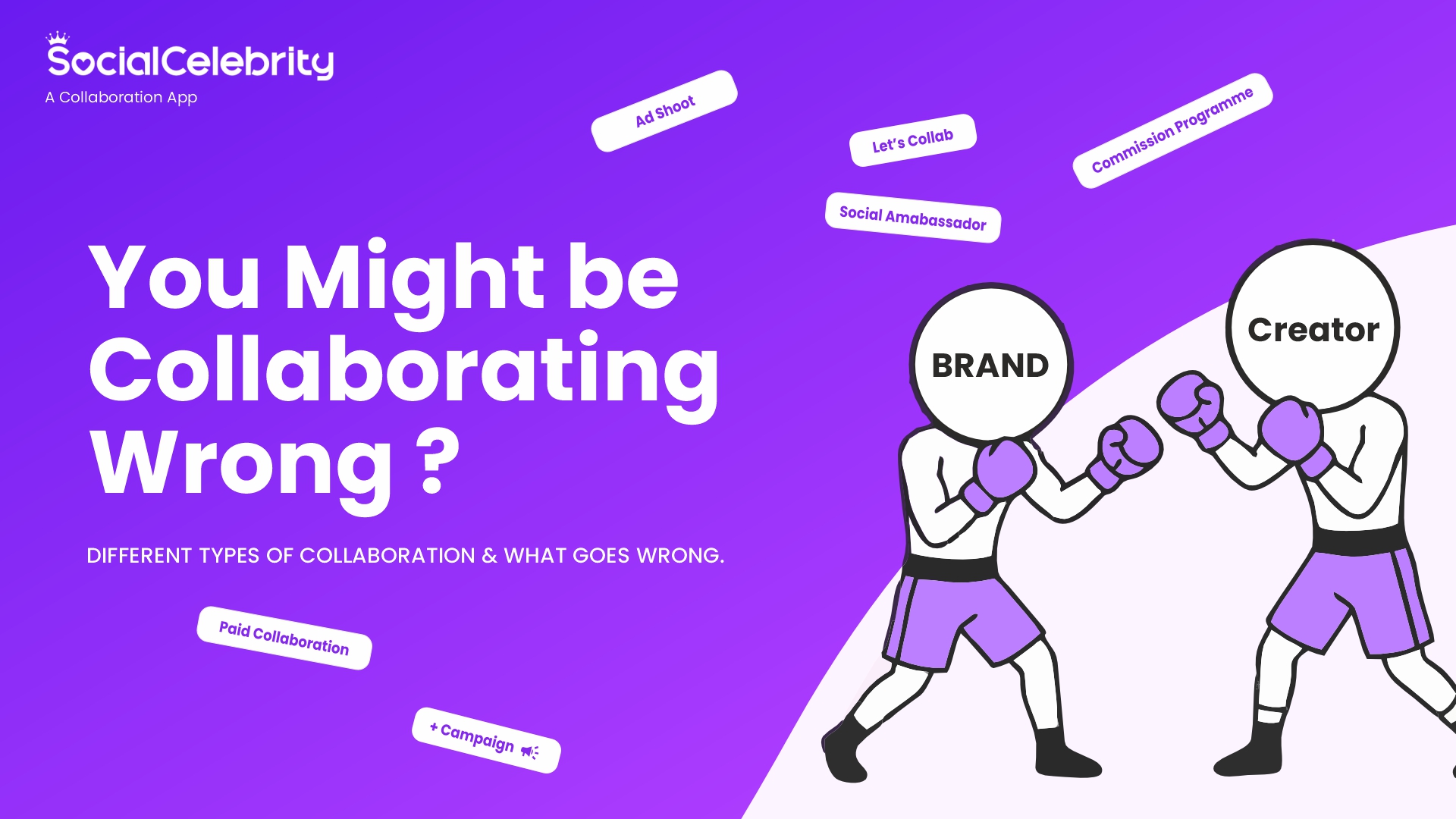
Everyone talks about "brand deals" — but the phrase covers wildly different arrangements, each with its own rules, risks, and rewards. Here's what every brand and creator needs to know before signing anything.
By SocialCelebrity8 min readInfluencer MarketingApril 2026
Social media has made it genuinely possible for a creator with ten thousand followers to drive more results for a brand than a television commercial. The opportunity on both sides is real. What holds mostbrand-creator partnerships back is almost never the wrong people — it's the absence of structure. Both sides come in with different assumptions. Understanding the types of influencer collaborations — and what each one actually requires — is where that changes.
01
Organic Collaboration
The everyday handshake
Most influencer collaborations start here. A brand reaches out, a creator makes content, and it goes up on their profile. It looks natural because it largely is — the creator controls the narrative, the tone, and the final edit. The brand gets authentic exposure; the creator gets paid (or gifted) for work that fits their existing style.
What many people miss is that organic deals don't hand over any content rights by default. If a brand wants to repost or repurpose what you made, that's a separate conversation — and a separate fee.
Lock this down early: deliverables, timeline, and who approves the final content. Vague briefs almost always lead to revision spirals.
02
Paid Ads · Whitelisting
When your face becomes an ad
In a whitelisting deal, a brand takes the content you created and runs it as a paid ad — through their account, not yours. Your name and likeness are still attached, but the brand decides who sees it, how often, and for how long.
It's powerful for brands because creator content routinely outperforms polished studio ads. It's worthwhile for creators if the compensation reflects that value — which it often doesn't unless you negotiate explicitly. Pin down: how long the ads run, which platforms, and whether the brand can edit the original.
A fair window: 30–90 days is standard. Anything open-ended or "perpetual" should come with significantly higher pay.
03
Affiliate · Commission
You earn what you sell
Affiliate marketing for influencers flips the payment model entirely. Instead of a flat fee, creators earn a commission on every sale, click, or lead their unique link or discount code generates. There's no guaranteed payday — but there's also no ceiling if your audience genuinely trusts your recommendations.
For brands, it's a low-risk way to scale. For creators, it works best when the product actually fits your niche. Promoting something you clearly don't use yourself tends to convert poorly and damages your credibility faster than it earns you money.
Before agreeing: ask for the commission structure in writing, how attribution is tracked, and the cookie window — the gap between a click and a sale that still earns you credit.
The affiliate model rewards creators who genuinely know their audience — and quietly exposes those who don't.
04
Brand Ambassador Program
A relationship, not a transaction
Brand ambassador programs are the long game. Instead of a single post, a creator represents a brand across months — showing up in their feed, their stories, maybe their events. The brand gets continuity and genuine association; the creator gets stable income and deeper creative alignment with something they actually stand behind.
The risk is that they tie you to one company for an extended stretch. If the brand faces controversy, or the product doesn't hold up, you're still contractually associated. Vet the partnership like you'd vet a job offer — because in many ways, it is one.
Structure matters: a content calendar, clear milestone payments, and agreed revision limits make the difference between a productive ongoing relationship and a slow-burning dispute.
05
Gifting · Barter
Product instead of payment
Gifting is common — especially for newer creators — and it's often misunderstood. Receiving a product in exchange for posting isn't fundamentally unfair, but it requires the same level of clarity as any paid deal. What exactly are you expected to post? When? Does the brand own the content afterward?
The number to keep in mind: your time creating content has real value regardless of whether compensation arrives as cash or product. If the retail price of what you're receiving wouldn't justify the hours you're investing, the math probably doesn't work in your favor.
In most regions, gifted content that involves an endorsement still requires disclosure — free product doesn't exempt you from transparency rules.
06
Exclusivity Rights
What you agree not to do
Exclusivity clauses are easy to skim past and expensive to ignore. When a brand asks for category exclusivity — say, skincare — you're agreeing not to promote any competing product for a defined window, even if a better deal comes along. That's a real cost, and brands know it.
Exclusivity should always carry a premium. Know which brands you're already working with or likely to work with before you sign, and make sure the duration is specific — "for the duration of our relationship" is not a duration.
07
Content Usage Rights
The clause almost everyone underreads
Content usage rights determine who can use your content, where, and for how long. It's not just a legal formality — it's where the actual value of the work is defined. A post that lives on Instagram for a week has very different worth than the same image running in paid ads, on a brand website, and in email campaigns for two years.
The standard categories: organic reposts (low value), paid advertising use (moderate to high), e-commerce or product page use (ongoing value), and full buyout. Each step up the ladder should reflect a corresponding step up in fee.
If a contract says "all rights in perpetuity across all platforms and media," that's a full buyout in everything but name. Price it accordingly.
What it actually comes down to
The difference between a good brand deal and a bad one is almost never the type of collaboration — it's how clearly the terms are defined before anyone starts creating. Vague agreements feel fine until they don't, and by then you're usually mid-campaign with no leverage.
For brands: specificity is your friend. The more clearly you define what you want, the more likely you are to get it. For creators: your content is your product. Understand what you're licensing before you hand it over — because once you do, those terms are very hard to renegotiate.
The best influencer marketing partnerships are the ones where both sides leave the negotiation feeling like they got a fair deal. That starts with everyone speaking the same language about what the deal actually includes.